 All StarAuto Repair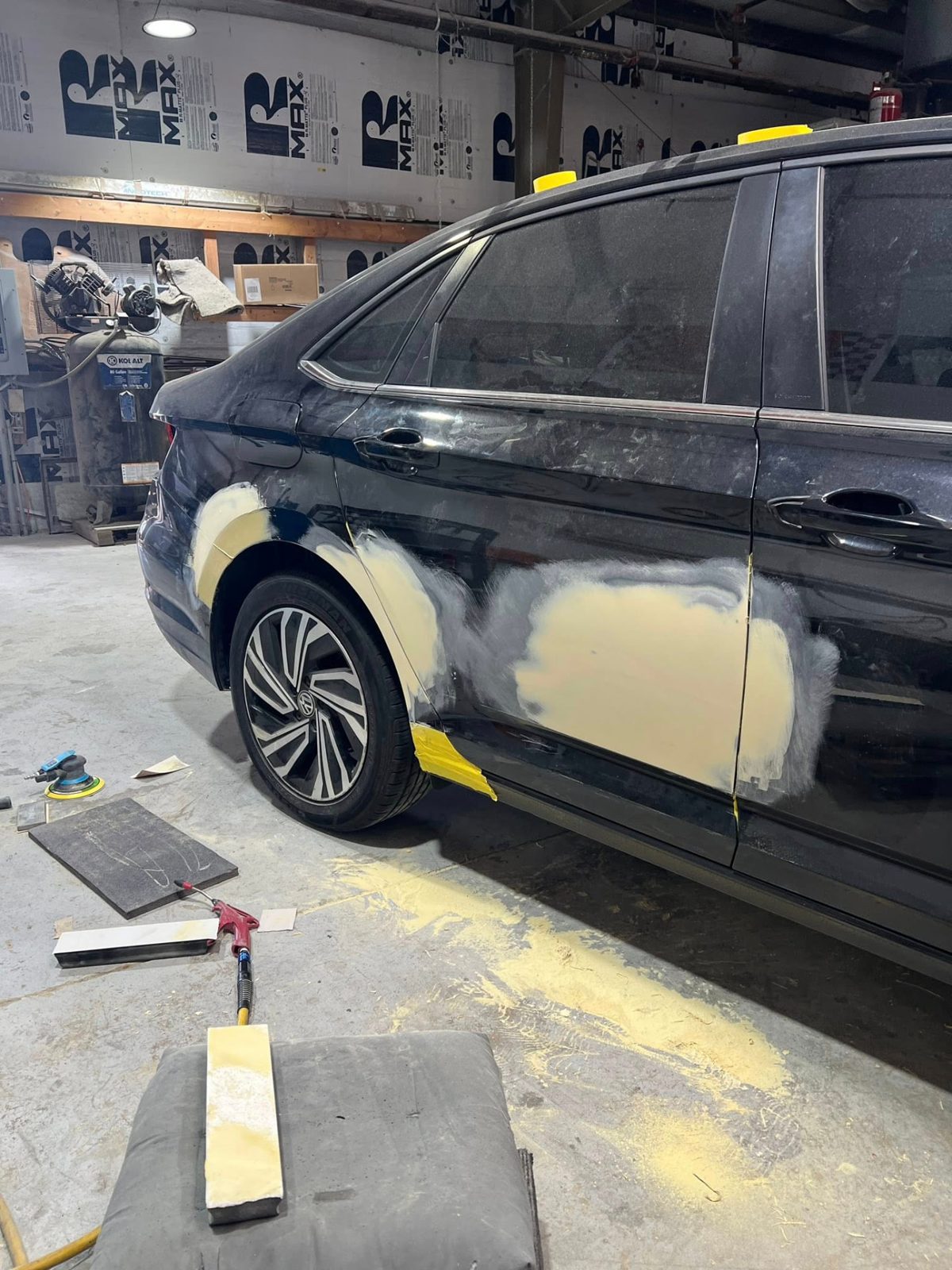
Auto body & paint
Good body lines.
Clean finish.
Dent, scratch, rust, panel and complete paint work focused on an invisible repair.
Body and finish
The surface tells the story.
A paint job is only as good as the preparation behind it. The process stays visible from bare metal to the final polish.
- 01Surface assessment
Existing finish, dents, and surface damage are evaluated before work begins.
- 02Preparation
Surfaces are prepped to give the new finish an even foundation.
- 03Refinishing
Color-matched automotive paint is applied for a consistent appearance.
- 04Final polish
The cured finish is inspected and finished for depth and clarity.
From rough surface to clean result.
- Dent and scratch correction
- Panel preparation and sanding
- Color-matched refinishing
- Final polish and inspection
Auto body and paint in Lake Park, Florida
Your vehicle’s body and paint do far more than make it look good. Body panels give the car its shape and aerodynamics, protect the structure underneath, and hold doors, lights and trim in place. Paint protects those panels from rust, UV damage and the elements while giving the vehicle its color and gloss. When either one is damaged, your car loses value and protection. All Star Auto Repair is an auto body shop in Lake Park that specializes in restoring both.
This guide explains everything about auto body and paint work: dent repair, scratch repair, rust repair, panel replacement, color matching, blending, full paint jobs, clear coat repair and how to care for a new finish in the South Florida climate. When you are ready, call (561) 890-7999 or send a free estimate request.
What an auto body shop does
An auto body shop repairs the exterior structure and finish of a vehicle. That is different from a mechanical repair shop, which focuses on engines, transmissions, brakes and suspension. Body shops handle:
- Dents, dings and creases in metal panels.
- Scratches, scuffs and chips in paint.
- Cracked, torn or misaligned bumpers.
- Rust and corrosion on body panels.
- Panel replacement after damage.
- Complete and partial paint jobs.
- Collision repair after accidents.
At All Star, body and paint work is our core focus. We repair cars, trucks, SUVs and vans from almost every manufacturer. You can see examples organized by brand in our gallery.
Dent repair
Dents come from door dings, shopping carts, falling branches, minor collisions and countless other everyday events. How a dent is repaired depends on its size, location and whether the paint is damaged.
Paintless dent repair
When the paint is intact and the dent is shallow, paintless dent repair may be possible. Technicians use specialized tools to gently massage the metal back into shape from behind the panel. Because no paint is involved, the factory finish is preserved. This method works best on smooth, accessible areas and is less suitable for sharp creases, edges, or dents with cracked paint.
Conventional dent repair
When paint is cracked or the dent is too deep for paintless methods, conventional repair is used. The metal is pulled and shaped as close to original as possible. A thin layer of body filler may be applied to refine the surface. The area is then sanded, primed and painted. Done correctly, the repaired area is indistinguishable from the rest of the panel.
Creases and body lines
Body lines are the crisp styling lines stamped into panels. Restoring them requires skill, because a slightly soft or wavy line is noticeable. Our technicians take extra care to restore body lines so reflections flow naturally across the panel.
Scratch and scuff repair
Not every scratch needs a full repaint. The depth of the scratch determines the fix.
- Clear coat scratches only affect the top protective layer. Many can be polished out.
- Base coat scratches go through the clear coat into the color layer. These usually require touch-up or refinishing.
- Primer or metal scratches go all the way through the paint. These must be refinished to prevent rust.
A simple test: run a fingernail across the scratch. If your nail catches, the scratch probably goes deeper than the clear coat.
Rust repair
Rust is a serious concern in coastal Florida. Salt air, humidity and frequent rain accelerate corrosion, especially on older vehicles or anywhere paint has been chipped. Rust often starts on wheel arches, rocker panels, door bottoms, trunk lids and around windshields.
Surface rust can often be sanded away, treated and refinished. Rust that has eaten through the metal requires cutting out the affected section and welding in new metal, or replacing the panel entirely. Simply painting over rust does not work; it keeps spreading underneath. The sooner rust is addressed, the easier and less expensive the repair.
Panel replacement
Some panels are too damaged to repair economically or safely. Bolt-on panels like fenders, hoods, doors and trunk lids can be replaced. Welded panels like quarter panels and roof skins require more extensive work. Replacement panels are fitted, aligned, corrosion-protected and painted to match. The collision repair page covers how panel replacement fits into a larger repair.
Paint jobs
Paint work ranges from a single panel refinish to a complete color change. Here are the most common types of automotive paint jobs we perform.
Spot repair
When damage is limited to a small area, a spot repair refinishes only the affected area and blends it into the surrounding finish.
Panel refinish
When an entire panel has been repaired or replaced, the full panel is painted. Adjacent panels are often blended for a seamless match.
Partial paint job
Some vehicles need several panels refinished, such as a hood and roof with failing clear coat. A partial paint job covers only those areas.
Complete paint job
A full repaint covers the entire exterior. It may restore a faded original color or change the vehicle’s color entirely. A quality complete paint job involves removing or masking trim, lights and moldings, preparing every surface, and applying primer, base coat and clear coat. A color change may also involve door jambs and other areas visible when doors are open.
How paint color matching works
Matching paint is both science and art. Your vehicle’s color code, usually found on a sticker in the door jamb, identifies the factory color. But the same color code can vary slightly from vehicle to vehicle because of production variations, and factory paint changes over time as it ages in the sun.
Paint codes and variants
Paint manufacturers publish formulas for each color code, often with several variants to account for production differences. Choosing the right variant is the first step.
Spray-out cards
Painters often spray a test card and compare it with the vehicle under different lighting. The formula can be adjusted if needed.
Blending
Blending is the technique of gradually fading new color into an adjacent panel so the eye cannot detect a line where new paint meets old. For example, when a door is refinished, the painter may blend color into the fender and rear door. Blending is one of the most important techniques in producing an invisible repair.
Tri-coat and specialty colors
Pearl whites, candy reds and some metallics use three layers: a base color, a translucent mid-coat, and clear coat. These colors are more difficult to match because the look depends on the thickness of the mid-coat. They require extra time and skill.
Layers of automotive paint
Understanding paint layers helps explain why proper refinishing takes time.
- E-coat and primer: The foundation layer that bonds to the metal and protects against corrosion.
- Primer surfacer: Builds up and smooths the surface. It can be sanded to create a perfectly flat base.
- Sealer: Creates a uniform surface and can help with color holdout.
- Base coat: The color layer.
- Clear coat: The glossy protective top layer that resists UV, chemicals and scratches.
Each layer must be applied correctly and cured before the next. Rushing any step can lead to peeling, dieback, or poor adhesion.
Surface preparation
Professional painters say that most of a good paint job happens before any color is applied. Preparation includes:
- Washing and degreasing the vehicle.
- Removing trim, emblems, lights and moldings, or carefully masking them.
- Sanding the surface to create adhesion.
- Repairing dents, chips and imperfections.
- Applying primer and block-sanding it smooth.
- Cleaning with wax and grease remover and tack cloths.
- Masking every area that should not be painted.
You can see vehicles in the masking and primer stages in our gallery.
Paint booths and environment
Paint needs a clean environment to cure properly. Dust, bugs, humidity and temperature all affect the finish. A controlled paint environment helps reduce contamination and produces a cleaner, more durable finish.
Clear coat failure
Clear coat failure is one of the most common paint problems in Florida. It starts as a dull, hazy patch, usually on the roof, hood or trunk, where the sun hits hardest. Over time, the clear coat begins to peel, flake, and turn white. Once it peels, polishing cannot fix it. The only real repair is removing the failing clear coat, preparing the surface and refinishing.
Paint protection
After investing in body and paint work, protect it. Here are a few options.
- Wax provides a thin layer of protection and needs frequent reapplication.
- Sealants last longer than wax and offer good UV resistance.
- Ceramic coatings bond chemically to the clear coat and can last much longer with proper maintenance.
- Paint protection film is a clear film applied to high-impact areas like the front bumper, hood and mirrors to resist rock chips.
Ask us how long to wait after refinishing before applying wax, sealant or coatings. Fresh paint needs time to cure fully.
South Florida paint care tips
- Rinse salt and sand off after beach trips.
- Remove lovebugs promptly during lovebug season in spring and fall. Their remains are acidic and can etch paint.
- Park in the shade when possible.
- Clean off bird droppings and tree sap right away.
- Hand wash with a pH-balanced car shampoo.
- Dry with a clean microfiber towel to avoid water spots.
- Inspect paint regularly for chips and treat them before rust starts.
The U.S. Environmental Protection Agency regulates automotive refinishing emissions, and modern paint systems are designed to meet those requirements while delivering durable finishes.
Plastic and composite repair
Many modern body parts are made of plastic or composites, including bumper covers, fender liners, mirror housings and some fenders and hoods. These materials require specific repair methods, including plastic welding, flexible repair materials and adhesion promoters. See our bumper repair page for details.
Aluminum body panels
Some vehicles, including many Ford F-150 trucks, some luxury cars, and several electric vehicles, use aluminum body panels. Aluminum is lighter than steel but behaves differently when damaged and repaired. It requires dedicated tools to prevent contamination with steel particles, which can cause corrosion. We explain aluminum repair considerations when they apply to your vehicle.
Classic and custom vehicles
Owners of classic and custom vehicles have high expectations. Restoration-level paint work requires patience and attention to detail. If you have a classic or custom project, call us to talk about your goals.
Fleet and commercial vehicles
Local businesses depend on their work vans and trucks. We repair and refinish commercial vehicles and understand that downtime costs money. Talk to us about scheduling repairs to minimize disruption.
What affects the cost of body and paint work?
- The size and number of damaged areas.
- Whether panels can be repaired or must be replaced.
- The color and type of paint.
- Blending requirements.
- Removal and reinstallation of trim, lights and moldings.
- The vehicle’s make and model.
We provide a written estimate before any work begins. Check our promotions page for this month’s featured offer.
Auto body and paint on every brand
We work on domestic, Asian and European vehicles, including Toyota, Honda, Ford, Chevrolet, GMC, Dodge, Jeep, Nissan, Hyundai, Kia, Mercedes-Benz, BMW, Lexus, Cadillac, Porsche and Tesla. Browse examples in the gallery.
Frequently asked body and paint questions
Will the new paint match my car?
We match paint to your vehicle’s color code and adjust as needed, then blend into adjacent panels for a seamless result.
How long does a paint job take?
A single panel refinish may take a day or two, depending on the repair and curing. A complete paint job takes longer because of preparation and disassembly.
Can you fix peeling clear coat?
Yes. Peeling clear coat requires removing the failed layer and refinishing the affected panels.
Can I wash my car after a paint repair?
Hand washing is usually fine after a short period, but avoid automatic car washes and waxing until the paint has cured. We will give you specific guidance.
Do you repair rust?
Yes. We treat surface rust and repair or replace panels with rust-through.
Read more on our FAQ page and in our blog, where we explain how paint matching works in more depth.
About our team
The quality of body and paint work comes down to the people doing it. Meet the team on our about us page. If you are an experienced painter or body technician, see our careers page.
Serving Palm Beach County
Our auto body shop is located at 825 15th St #7 in Lake Park, convenient to North Palm Beach, Palm Beach Gardens, Riviera Beach, West Palm Beach, Jupiter and surrounding communities.
Why the details matter
A paint job can look good from ten feet away and still have problems up close. Look for these signs of quality:
- Consistent color in sunlight, shade and at an angle.
- Even gloss across adjacent panels.
- Matching texture. Factory paint has a slight texture, and refinished areas should look similar.
- Clean edges with no overspray on trim, glass or rubber seals.
- No dust nibs, runs or sags.
- Properly reinstalled trim and emblems.
When you pick up your vehicle, we encourage you to look closely. If anything is not right, tell us.
Choosing between repair and repaint
If your car has several small issues, such as scratches on multiple panels, faded clear coat on the roof and a dent in the door, it may make sense to address them together. Combining repairs can reduce overall cost because preparation, masking and paint setup are shared. We can talk through options that fit your budget and goals.
Resale value
Well-maintained paint and straight body panels help a vehicle hold its value. Dealers and private buyers notice dents, faded paint and mismatched panels. Professional body and paint work can make a meaningful difference when it is time to sell or trade in. For vehicle value research, resources like Kelley Blue Book and the dealer trade-in process consider condition as a key factor.
Get your estimate
Whether it is one scratch or a full repaint, we will give you a straightforward estimate and a clear plan. Call (561) 890-7999, stop by 825 15th St #7 in Lake Park, or send a free estimate request. We are open Monday through Friday from 8:00 AM to 5:30 PM and Saturday from 9:00 AM to 3:00 PM.
Common paint problems and what causes them
Understanding paint problems helps you recognize when to seek repair.
- Oxidation makes paint look chalky and dull. It is caused by UV exposure and can sometimes be polished if caught early.
- Clear coat failure appears as cloudy, peeling patches, most often on horizontal surfaces.
- Etching from bird droppings, bugs and sap leaves dull spots or rings in the finish.
- Rock chips on the hood and front bumper expose primer or metal and can lead to rust.
- Swirl marks from improper washing create fine circular scratches visible in sunlight.
- Fading is especially common on red and dark colors exposed to strong sun.
- Peeling on plastic parts usually means poor adhesion from a previous repair.
How long a quality paint job lasts
A properly prepared and applied automotive finish can last for many years with reasonable care. Longevity depends on preparation, materials, sun exposure, and maintenance. Vehicles stored in garages and washed regularly keep their finish far longer than vehicles parked outdoors near the coast.
Choosing the right time for paint work
South Florida weather affects paint scheduling. Humidity, temperature and rain all influence how paint lays down and cures. While a controlled environment minimizes these effects, planning larger paint jobs during drier months can be convenient, and it lets you enjoy a freshly finished car during the most pleasant time of year. Smaller repairs can be done any time.
Paint and body work for resale and lease returns
If you are returning a leased vehicle, excess wear charges for dents, scratches and bumper damage can add up. Repairing damage before the lease inspection is often less expensive than paying the charges. Likewise, if you are selling or trading in, repairing obvious cosmetic damage can improve offers. We can look at your vehicle and tell you which repairs are likely worthwhile.
Working on your vehicle’s details
Beyond panels and paint, body work includes the details: emblems, moldings, door handles, mirror caps, trim pieces and lights. Removing and reinstalling these carefully, rather than masking around them, often produces cleaner edges and a more factory-like result. When clips break, we replace them so trim stays secure.